← Home LinkedIn Linkedin

Lennard-Jones Simulation

Molecular Dynamics • Inter-Particle Forces • Potential Energy

Overview

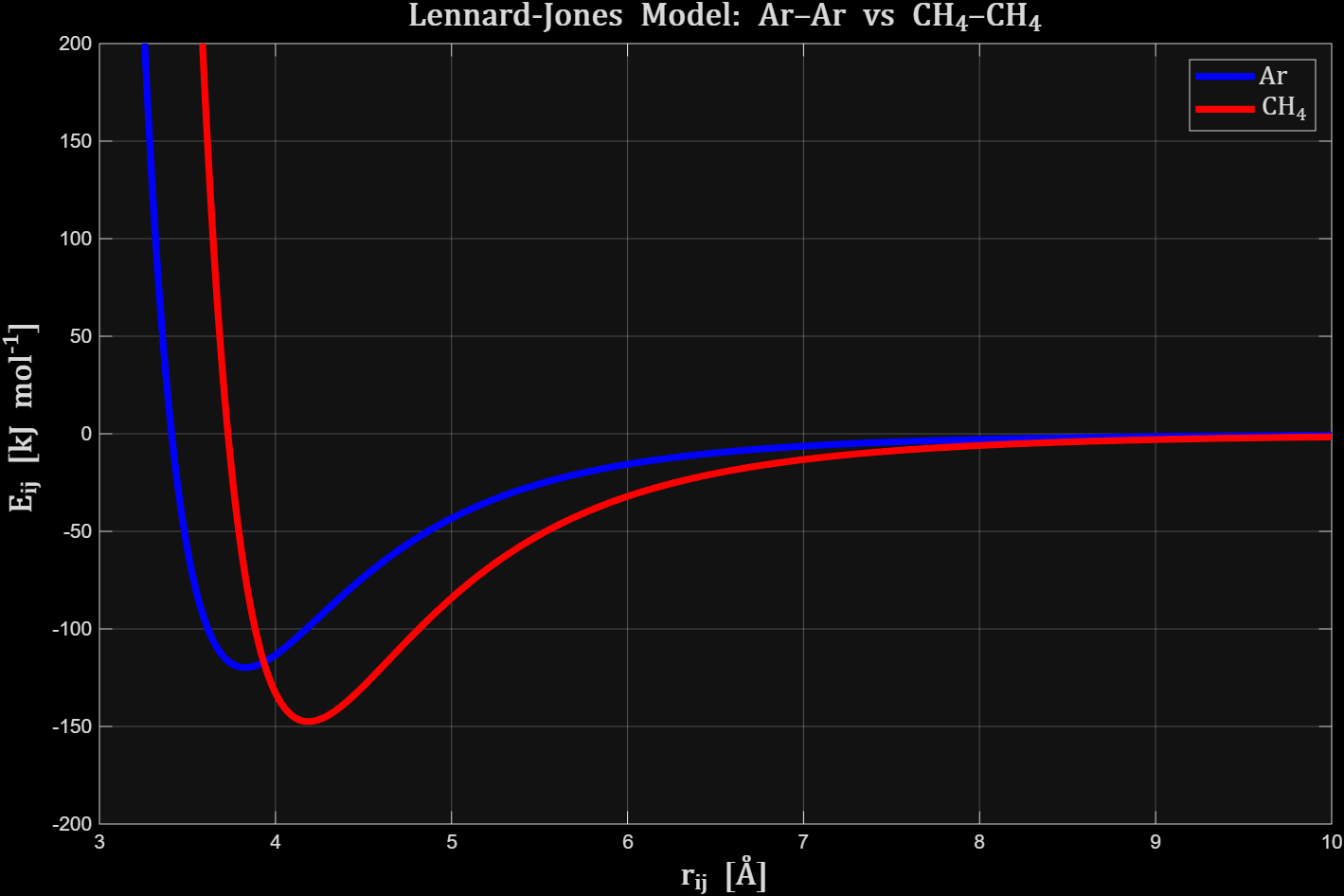
This simulation models interacting particles by Lennard-Jones potential. The LJ force captures both the short-range repulsion and longer-range attraction, producing realistic molecular clustering and stability.

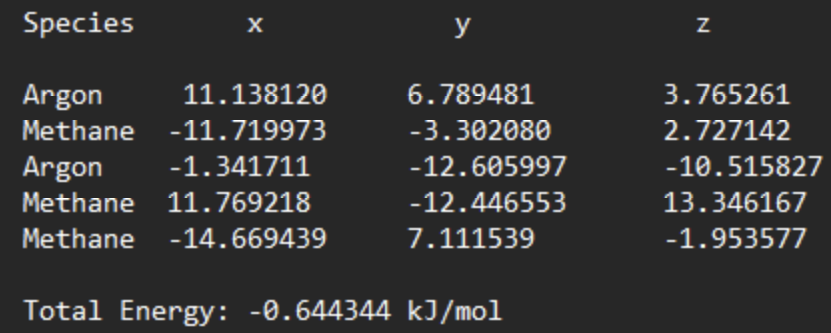
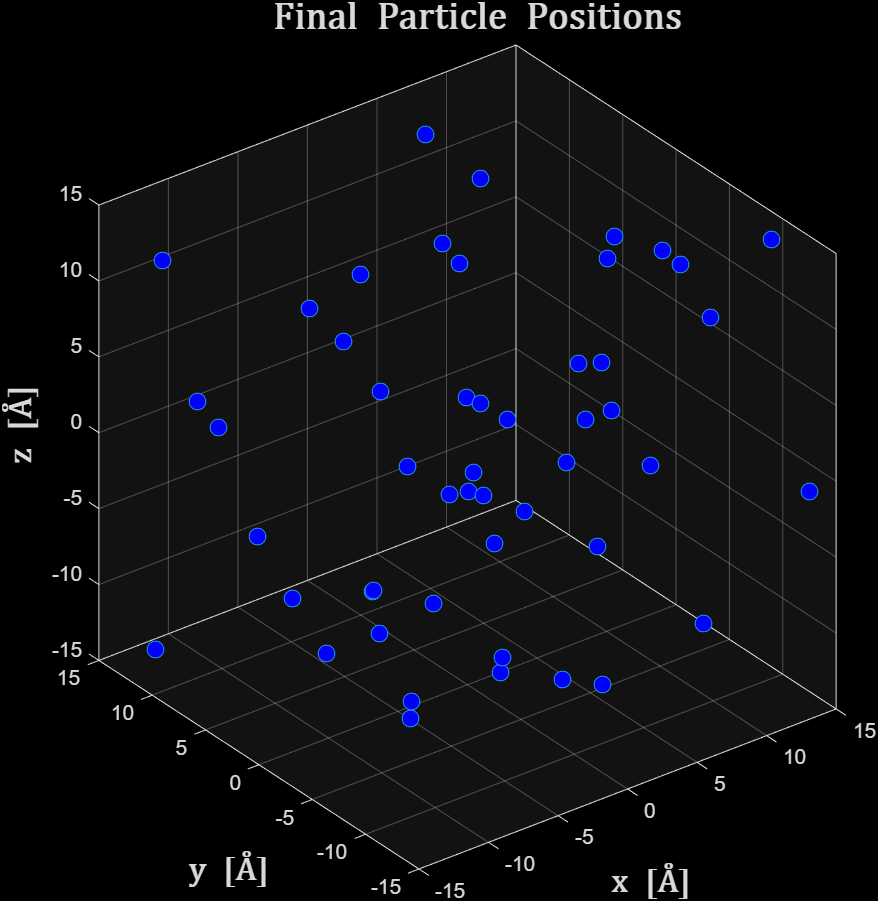
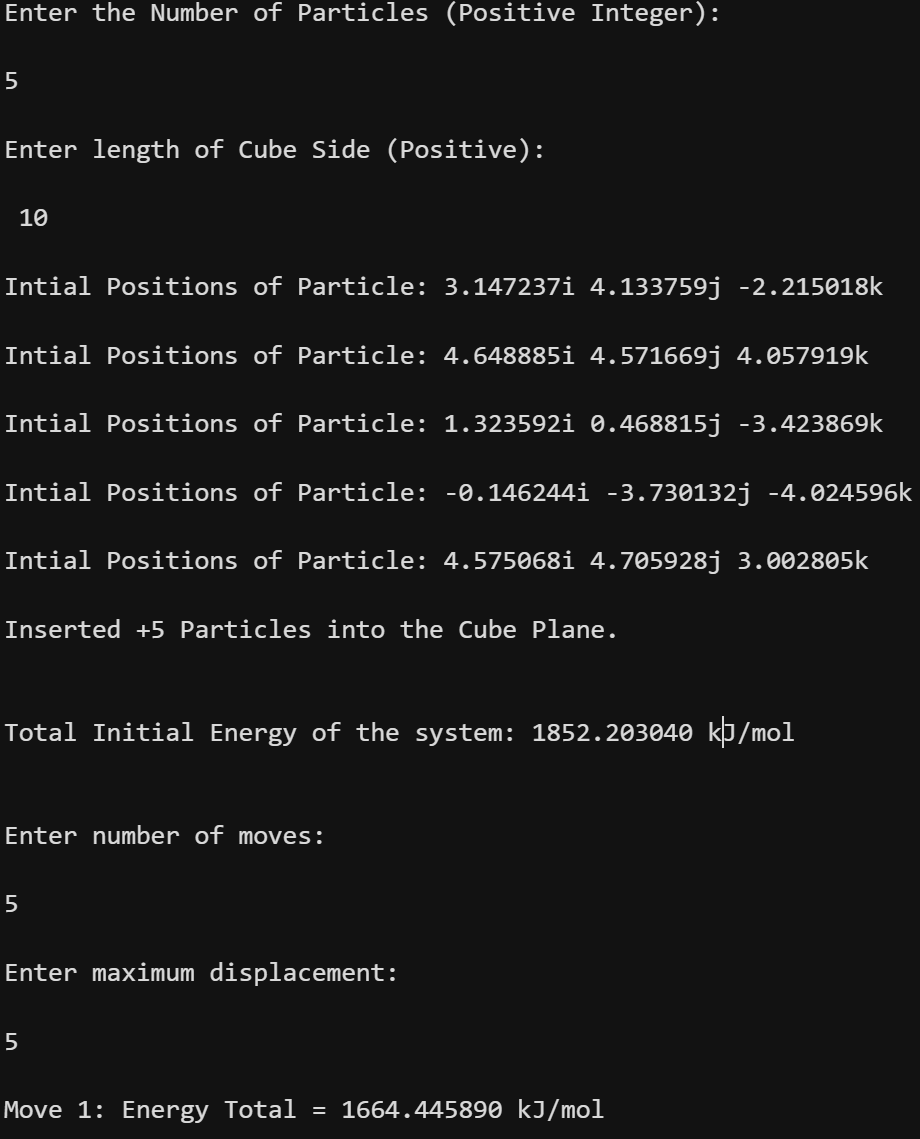
The plots generated depict the impact of particle positioning, the total energy and maximum displacement of Monte Carlo moves.

Matlab Intermolecular Dynamics Chemistry
Lennard-Jones System Snapshot

Snapshot

Force Model Lennard-Jones

Repulsive & attractive inter-particle interaction.

Dynamics Move Iteration

Numerical updates of positions & total energy.

Particles Configurable

Supports an arbitrary number of simulated bodies (N).

Energy Stabilising

System relaxes toward low-energy equilibrium states.

Lennard-Jones

Representative simulation frame.

How It Works

1. Compute Forces

For every particle pair, the Lennard-Jones formula determines repulsion or attraction based on separation distance.

2. Integrate Motion

Updates particle velocities and positions at each timestep.

3. Observe Equilibrium

The system evolves toward lower-energy states, producing stable particle spacing and emergent structures.